House Painting Riverside, CA
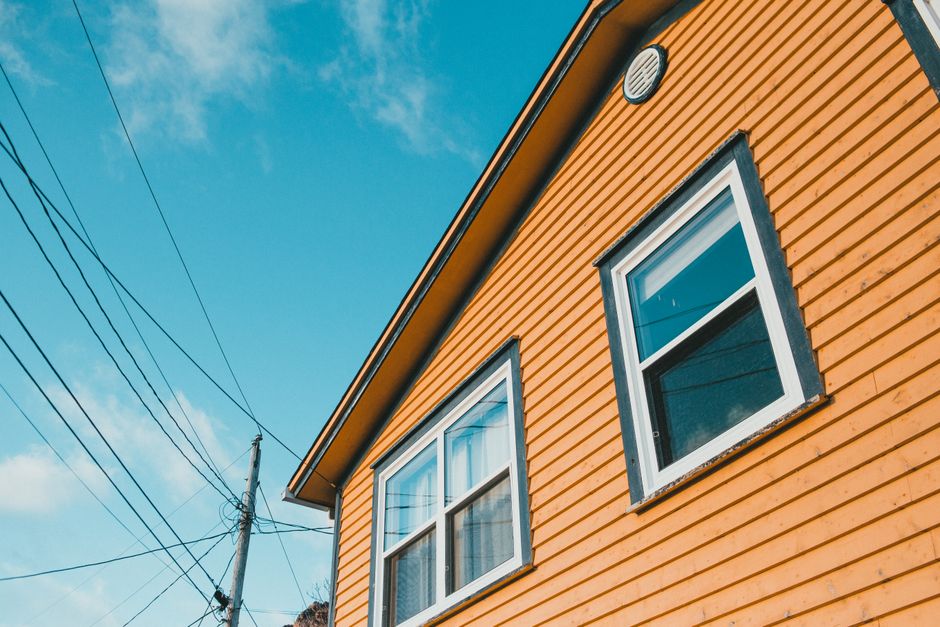
Practical notes on house painting in Riverside, CA, from choosing colours for stucco, Craftsman and ranch homes to testing swatches in strong inland sun.
What We Cover
- Choosing a Front Door Colour How to pick a front door colour and sheen that holds up on a sunny Riverside entry.
- Craftsman Colour Schemes for Older Riverside Homes How body, trim and accent colours are layered on Craftsman houses in older Riverside neighbourhoods.
- Heat Reflective Paint on Hot Walls What heat-reflective paint does on west-facing Riverside walls and where lighter colours help or fall short.
- Mission Revival Stucco Colour Choices Which body colour and trim colour choices suit a Mission Revival house in the style of the Mission Inn area.
- Ranch House Colours and Sheen Choices Colour and sheen choices for the long, low ranch houses common across Riverside suburbs.
- Testing Swatches in Strong Inland Sun How to test a sample swatch on a Riverside wall so hard inland sun does not trick you into the wrong colour.
House Painting Riverside, CA
House painting in Riverside, CA is shaped by sun more than by anything else. Walls that face west bake through summer afternoons, stucco throws glare, and a colour that looked calm on a small chip can turn hard and bright once it covers a whole elevation. The crew's side of the job is mostly about slowing that decision down and checking it against the real wall.
Colours for Riverside Housing Styles
The city holds an unusual spread of houses. Mission Revival stucco near the Mission Inn, Craftsman bungalows around Fairmount Park, and long ranch houses toward the Box Springs Mountains each ask for a different approach. Body colour, trim colour and the front door have to read as one scheme on each of them, and the proportions that work on a bungalow porch do not carry over to a sixty foot ranch front.
Testing Before Committing
A sample swatch painted at a decent size, then watched from first light to dusk, settles more arguments than any fan deck. Undertone shows up late in the afternoon, sheen shows up at noon, and light reflectance explains why a pale colour holds up better on a hot wall. Paint decisions made from a chip under shop lights tend to be revisited.
Heat, Fade and Upkeep
Across the Inland Empire the sun is hard on deep colours, so fade, heat and touch-up paint matter as much as the first coat. Heat-reflective paint and lighter colours help the surface of a wall, though they do not replace insulation. Keeping a labelled sample and a sealed jar of the final mix makes later repairs far easier to match.
Guides
The pages here cover testing swatches in strong sun, Mission Revival, Craftsman and ranch colour schemes, heat-reflective paint on hot walls, and choosing a front door colour for Riverside County homes.
Latest Guides
Matching Touch-Up Paint on Sun-Faded Riverside Walls
2026-10-06
Every painted house in Riverside, CA eventually gets a scuff, a chip or a scratch that needs fixing, and the fix is rarely as simple as opening the old can and dabbing at it. Touch-up paint that looked perfect in the jar can leave a visible patch on a wall that has spent a few summers under the Inland Empire sun. The questions below come up on nearly every repaint, and the answers are mostly mechanical: batch, sheen, application and timing decide whether a repair disappears or glows.
Why does touch-up paint look different from the wall around it?
Three things usually cause the mismatch. The first is fade. The original coat has been exposed to ultraviolet light and heat for months or years, while the touch-up is brand new, so even an identical colour reads slightly deeper or brighter. The second is sheen. A patch that dries at a different sheen from the surrounding wall catches the light differently, and a satin patch on a flat wall shows as a shiny spot from across the street. The third is thickness. Paint dabbed on thickly stands proud of the surface and throws a tiny shadow, so the edge of the repair becomes visible even when the colour is right.
Strong, low afternoon light across a west wall makes all three problems worse. The light skims the surface, and every ridge, sheen difference and edge shows up. A repair that looks fine at noon may stand out at five o'clock, which is why checking a repair at the end of the day is a good habit.
Can touch-up paint from the original can still be used years later?
Sometimes. Paint that has been stored with a tight lid, away from heat, can stay usable for a long time. A garage in Riverside County in July is a hard place for a can, though, because heat thickens paint and weakens the seal. Before using old paint, open the can, stir it thoroughly and look for a skin on top, lumps, a sour smell or a watery layer that will not mix back in. Any of those means the paint has gone bad and will not behave on the wall. Strain it through a paint filter if it only has a few bits of dried skin, and discard it if it is lumpy.
A better habit is to decant a small amount of the final colour into a clean glass or plastic jar with a tight lid right after the job and label it with the room, the colour name, the sheen and the date. A small jar has less air in it, so the paint keeps longer than the leftover in a half-empty gallon.
What if the original colour name is lost?
Many homeowners no longer have the receipt or the can. There are still options.
- Look inside the can lid, on the label, or on the underside of the can for a colour name, number and base.
- Check the inside of a garage or electrical panel door, where painters often write the colour and brand.
- Take a chip of the paint, about the size of a coin, from an inconspicuous spot, such as behind a downspout or inside a closet, to a paint store that can scan it.
- Use the scan result as a starting point, then test a small patch on the wall and let it dry fully before judging.
A scanned colour will match the current look of the wall, including fade, but only for the surface it was cut from. A chip from a shaded wall will look darker than one from the west side of the same house, so take the sample from the area that needs repair.
How much of the wall should be repainted for an invisible repair?
A tiny dab almost always shows. The reliable approach is to feather the new paint outward in a gradual taper, so there is no hard line where old meets new. Better still, repaint the whole panel, from one natural break to the next: a corner, a window edge, a trim line or a control joint in the stucco. A natural break hides the join because the eye expects a change of plane there. On a long ranch house wall, the break might be a gate post or a downspout. On a Craftsman bungalow, it may be the corner board or the edge of a porch.
When a whole panel is too much, a small roller with the same nap as the original finish helps, because it leaves the same texture as the surrounding area. A brush leaves bristle marks that show on stucco and a smooth wall alike.
Does the texture of the wall matter for touch-up?
It matters a great deal. Stucco has a sand or dash texture that throws tiny shadows, and a repair painted with a smooth brush stroke fills those shadows and looks flat. A short-nap roller or a stipple brush pushes paint into the texture and keeps the pattern. On smooth siding or trim, the opposite applies, and a fine roller or a good angled brush that is laid off in one direction leaves less trace. For stucco cracks, a flexible acrylic caulk goes in before painting, and the surface should be lightly textured with a brush while still wet so the patch matches the surrounding finish.
Should the area be primed before touch-up?
If the scratch goes through to bare plaster, wood or metal, yes. Bare spots absorb paint unevenly and show up as dull patches, an effect painters call flashing. A small spot of primer, sanded lightly once dry, gives the topcoat an even surface to sit on. If only the topcoat is scuffed and the primer is intact, going straight to colour is fine. Clean the area first, since dust, grease and chalk keep fresh paint from bonding. A damp cloth for dirt and a degreasing wipe for hand marks around a door handle are enough for most spots.
What difference does weather make to the finish?
Paint applied in direct sun on a hot wall dries before it can level, which leaves brush marks and a rough edge. Wind and low humidity make the same problem worse. The best time for repairs on a sun-baked wall is in the shade, usually early in the morning on a west elevation and late in the day on an east one. Avoid painting when the surface is too hot to rest a hand on comfortably. Many Riverside neighbourhoods, from the streets near Mount Rubidoux to those closer to the University of California Riverside, have walls that reach that temperature by early afternoon in summer.
Cool, damp mornings are not ideal either, since paint dries slowly and picks up dust or insects. The comfortable middle, with a dry surface and mild shade, gives the best result.
How can the next repair be made easier?
- Keep a labelled jar of the final colour, with the name, sheen, base and date.
- Photograph the can label and the wall in daylight and store the picture with the house records.
- Paint a small test board in the same colour and keep it indoors as a reference that has not faded.
- Keep a small brush and a short-nap roller that are only used for that colour.
- Repair chips early, before moisture gets under the paint and spreads the damage.
When is touch-up not the right answer?
If the colour has faded unevenly across the whole elevation, any repair will show, because the new paint is a different age from everything around it. In that case, repainting the full wall from corner to corner is cleaner than a series of patches. The same applies when several chips cluster in one area, since a group of small patches draws more attention than a single even coat.
It also applies when the paint is failing rather than damaged. Peeling, blistering and heavy chalking mean the film has lost its grip, and painting over it will fail again. In those cases the loose paint needs scraping, sanding and priming before any colour goes on.
What is the simplest way to sum this up?
Keep the paint, label the jar and match the sheen and the texture, and a repair can disappear into the wall. When the wall has faded too far, repaint the whole panel and stop chasing patches.

Why Exterior Paint Fades Differently by Colour in Riverside
2026-10-06
Walk down any older street in Riverside, CA on a summer afternoon and the paint tells its own history. One house has a front door that has gone from deep red to a tired brick pink, the house next to it has trim that chalks off on a finger, and a third has a body colour that looks almost the same as the day it was rolled. The differences are rarely luck. They come from the colour itself, the surface it sits on, which way the wall faces, and how the paint was applied. Reading fade correctly makes colour selection much less of a gamble.
Why does sun fade paint faster in Riverside than on a coastal street?
Fade is mostly ultraviolet light breaking down the pigments and the resin that holds them in the film. Riverside County sits well inland, so the sun arrives with fewer cloudy mornings to soften it, and summer surface temperatures on a wall can climb far above the air temperature. Heat speeds up the chemical breakdown. A house in the Inland Empire gets many more hours of hard direct sun on its exposed walls than a house near the coast that spends part of each morning under marine cloud.
Orientation matters as much as region. A west wall takes the long hot afternoon sun, a south wall gets the highest sun for the longest stretch, and a north wall may look almost new after a decade. A homeowner walking around a house will often find three different stages of fade on the same paint job, and it is worth looking at all of them before choosing a new colour.
Which colours fade fastest, and which hold up?
Pigment chemistry decides most of this. Organic pigments, which give the bright reds, deep yellows and strong blues, break down faster in sun than inorganic ones such as the earth tones made from iron oxides. That is why a tan or brown house tends to look settled for years while a vivid red door gives up first. The table below sets out the pattern painters see over and over on exterior work.
| Colour family | How it ages in strong sun | Where it behaves best |
|---|---|---|
| Bright red and orange | Shifts toward pink or a flat salmon, often within a few seasons on an exposed door | Covered porch entries or shaded walls |
| Deep blue and purple | Greys out and loses depth, chalks on rough surfaces | Shaded trim or small accents |
| Dark green | Holds longer than red but can drift toward olive on a hot wall | Doors, shutters and trim on the north or east side |
| Earth tones and tans | Fade slowly and hide dust and chalk between repaints | Large body areas on any elevation |
| Warm whites and creams | Stay stable, though they can yellow slightly and show dirt at the base | Body and trim on west and south walls |
| Black and very dark grey | Show chalk quickly and get very hot to the touch | Small accents in shade, rarely whole walls |
None of this means a bold colour is off limits. It means a bold colour belongs where the sun is gentler, or is chosen knowing that touch-up paint or a fresh door coat will come sooner than the walls.
How does sheen change the way a surface ages?
A higher sheen resists dirt and wipes clean, but it also shows chalking and surface wear more clearly, because a glossy film loses its shine unevenly and the dull patches stand out. Flat paint hides the early stages of chalking, though it holds dirt more easily. On stucco, a flat or low eggshell finish is the usual choice because the texture breaks up the light and hides small differences in how the wall has aged. On a front door, satin or semi gloss tends to be worth the extra visible wear, because a door is handled and needs to be wiped.
Chalking itself is simple to test. Rub a dark cloth across the wall and see whether a pale powder comes off. A light dusting is normal. Heavy chalk means the resin is thinning out, and a new topcoat will not bond well until the surface is washed and the loose film is scuff sanded back. A chalky wall that gets painted over without that step can peel in sheets the following year.
Does light reflectance help with fade?
Light reflectance is the printed value that shows how much visible light a colour bounces back. Lighter colours reflect more light and absorb less heat, so the film on a west wall runs cooler and ages a little more slowly than the same film in a deep colour. The number does not measure fade resistance directly, and a pale colour made with weak pigments can still change, but as a rough guide high reflectance and slow ageing often go together on hot walls.
Heat-reflective paint pushes this a step further by using pigments that return more of the invisible infrared part of the spectrum. A mid-tone colour made this way can run cooler than a standard version of the same shade. It is a useful option for a wall that bakes, though it does not remove the need to choose colours with the sun in mind.
What does a fading wall tell a painter before the repaint?
Fade is a diagnostic. The pattern on the wall shows where the colour should be reconsidered and where the prep needs more work.
- Uneven fade across one wall usually points to different sun exposure, or to an earlier patch job done with a different batch of paint.
- Fade that stops at the edge of the eaves shows how much the roof overhang protects the upper wall, and suggests that lower sections near the ground may be the most exposed.
- A door that has faded much faster than the body shows that the accent colour was a high-fade pigment and may need a different choice next time.
- Blistered or flaking paint on top of faded paint is a moisture or adhesion problem, not a fade problem, and needs patching and priming before any new colour goes on.
How do Riverside house styles change the fade picture?
Mission Revival stucco, common around the Mission Inn and the older downtown streets, tends to hold muted warm colours well because the lighter, earthy palette matches how the style was originally painted.
Craftsman bungalows near Fairmount Park often have painted wood siding, and wood moves with temperature and moisture. A hot afternoon followed by a cool evening stresses the film at every joint, so fade and cracking often appear together. On those houses the trim and porch beams usually need attention before the walls do.
Single-storey ranch houses further out toward the Box Springs Mountains have long exposed walls with little shade, so the fade is even along the elevation but severe on the west side. A palette with a mid-tone body and a lighter trim often keeps the house looking balanced as it ages, because the trim fades less visibly than a deep body colour would.
How should a sample swatch account for fade?
A fresh sample swatch only shows the colour at its best. To judge how a colour will look in a few years, paint the sample on the hottest wall, then compare it with a swatch kept in a closed drawer. Better still, look at houses in the neighbourhood that were painted in a similar colour some years ago and note how that colour has aged on a similar orientation.
It also helps to think about undertone. A colour with a red or orange undertone shifts toward pink as the pigment breaks down, while one with a blue undertone shifts toward grey. Choosing a colour whose likely shift still looks acceptable, such as a warm tan that fades toward a lighter tan, protects the house from an unpleasant surprise.
What can be done to slow the fade?
- Choose a high-quality exterior acrylic latex, since the resin quality matters as much as the pigment.
- Apply the full two coats at the film thickness on the label, because thin coats fade and chalk early.
- Prime bare or patched areas so the topcoat dries evenly and does not flash with a different sheen.
- Place the boldest colours on shaded surfaces and the mildest on sun-baked walls.
- Keep a labelled jar of the final colour for touch-up paint, along with a note of the sheen and date.
How should the final colour be chosen?
Read the street and the wall before reading the colour card, since the sun in the Inland Empire sorts colours into those that last and those that do not. Pick the palette that will still look right after a few hot summers, not only on the day the last roller is cleaned.